
Search for a "cosmetic packaging manufacturer" or "cosmetic packaging supplier" and hundreds of names appear. Some are genuine manufacturers, others are pure middlemen; some send samples, others never reply. Navigating this noise to find the right partner directly shapes your brand's first impression.
In this article we cover the questions worth asking when evaluating a cosmetic packaging supplier, the difference between "manufacturer" and "supplier," and the red flags to watch for when sourcing wholesale cosmetic bottles.
1. "Manufacturer" or "Supplier"? Understanding the Difference
These two words are often used interchangeably, but the distinction matters. A cosmetic packaging manufacturer operates its own moulds and has direct access to the production line. A supplier, by contrast, typically works with multiple manufacturers, sourcing the right model for you and managing quality control and logistics as a strategic partner.
For small and mid-size brands, working directly with a manufacturer is often impractical - language barriers, minimum order quantities, and quality control processes become a heavy burden to manage alone. A good supplier simplifies that complexity on your behalf: finding the right manufacturer, checking samples, and tracking the production process.
Let's evaluate together whether a direct manufacturer relationship or a supplier partnership suits your project's scale.
2. Five Criteria to Look for in the Right Supplier
When evaluating a cosmetic packaging supplier, be sure to check these five points:
- Sample process - A serious supplier should be able to send samples before you commit to an order. Be wary of any supplier who is vague or evasive about sample requests.
- MOQ transparency - MOQ varies with product form and degree of customisation; choose a supplier who can explain this clearly.
- Quality control process - Ask how quality is checked before and after production. This is a critical safeguard, especially when sourcing from distant regions.
- Lead time transparency - Suppliers who provide a realistic, clear delivery timeline offer a more reliable partnership throughout the process.
- Customisation capacity - Clarify which techniques they offer (screen printing, hot foil, glass painting) and the minimum quantity required for each.
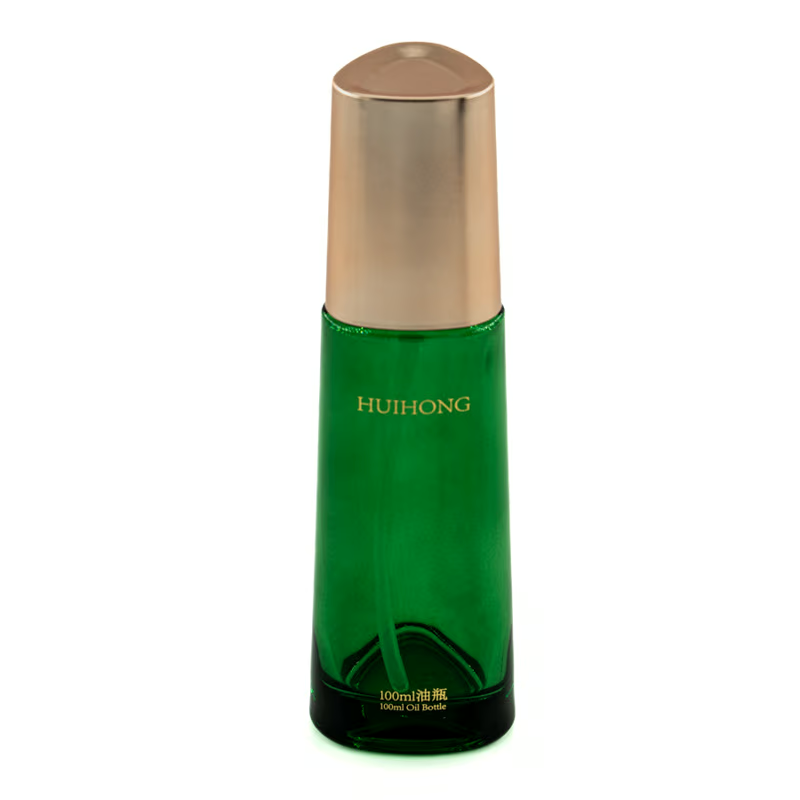
3. What to Watch for When Sourcing Wholesale Cosmetic Bottles
When sourcing wholesale cosmetic bottles, price is naturally a factor. But focusing on unit price alone can lead to more expensive mistakes down the line. Details like wall thickness, cap mechanism durability, and shipping damage rate often outweigh any visible price difference.
Another important point is the difference between catalogue items and custom design. Catalogue products can be sourced faster and with lower minimums, while custom-mould designs require a longer production process and generally a higher minimum quantity. Striking the right balance depends on your project's timeline.
4. The Value of a Long-Term Partnership
Cosmetic packaging sourcing isn't a one-time transaction - it's a process you'll return to repeatedly as your brand grows. That's why we recommend looking beyond the cheapest option on your first order, and instead choosing a supplier who communicates reliably, answers questions clearly, and takes responsibility when issues arise. Over time, this pays off in both time and cost.
Take a look at Yurtenpack's wholesale packaging collection and 15 years of sourcing experience to evaluate the criteria above against your own project.